Next steps for your institution
Curious about what a pilot with both enthusiasts and skeptics would look like for your organization? We are happy to share GGZ Centraal’s approach, from trial account to broad rollout.
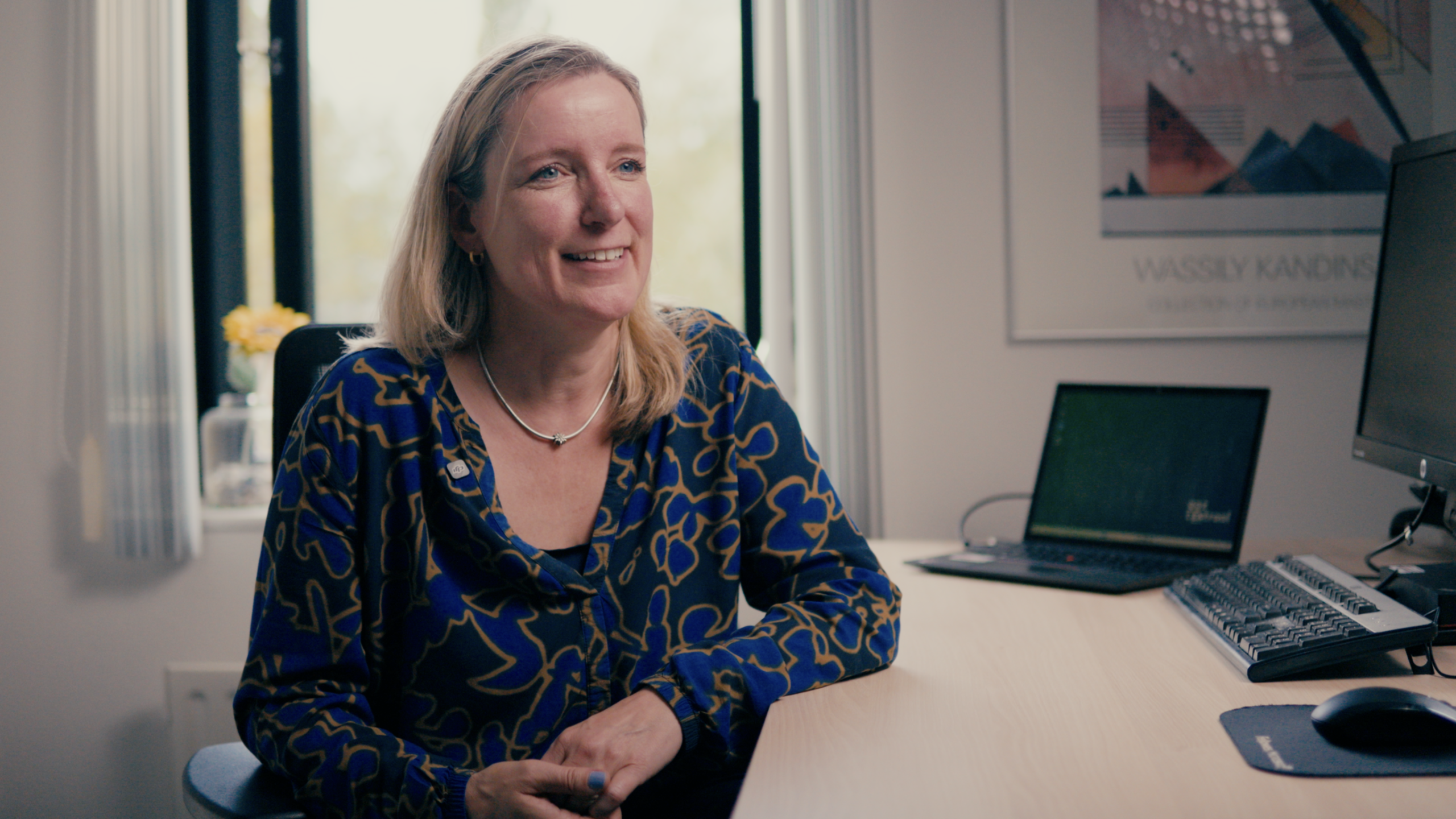
Project details
GGZ Centraal, a provider of specialist mental healthcare in the central Netherlands, wanted to reduce the reporting time of practitioners in favor of direct client care.
The solution had to align with their own working methods and templates, handle long conversations with multiple speakers, comply with ISO 27001, NEN 7510, and GDPR, and be usable without training.
Type of care
Specialist Mental Healthcare
Number of healthcare providers
Over 3,000
Testimonial by
Laura de Lange, Healthcare Psychologist
Average per session
Use Medendo on a daily basis
The rating a GGZ Centraal client gave the report
The challenge
At GGZ Centraal, a lot of time was spent on indirect tasks: documentation after a session. A short progress meeting resulted in a few sentences, but an intake, a long diagnostic session, or a developmental history—where someone recounts their entire childhood—could easily take two hours of processing time. As a result, practitioners often found themselves behind their computers in the evening.
It was also noticeable in the consultation room. Those who type during the session constantly look away from the client toward the screen. Previous attempts to adjust the reporting process—such as shorter reporting for intelligence testing—helped, but mainly led to discussion: so many employees, so many opinions.
Laura de Lange, Healthcare Psychologist at GGZ Centraal
The selection
It started at a ‘speech tasting’ organized by the GGZ knowledge hub, where various suppliers demonstrated their products. Laura immediately saw the potential but was also skeptical: long conversations and multiple voices in one room were still difficult at that time.
In the summer of 2024, GGZ Centraal started a pilot with a small group of primarily enthusiastic employees who tested several products side-by-side. Within this pilot, Laura tested another solution alongside Medendo, where the difference in quality and speed became immediately visible. Because the products were developing rapidly, the organization consciously decided not to choose yet and to conduct a second, broader pilot later—this time with entire teams, including colleagues who expected little from it.
Three things ultimately proved decisive for Medendo:
The result of the second pilot surprised even the early adopters: while colleagues had previously become accustomed to another product, almost everyone wanted to work with Medendo after the pilot.
The rollout
The startup went smoothly. Medendo has few buttons: a start button, a stop button, and a report that comes out. Not much explanation was needed, allowing teams to get started quickly.
GGZ Centraal did develop its own e-learning—not to explain the operation, but to share the ‘why’: reducing administrative burdens, the ideas behind the product, and practical tips such as using the template wizard, the magic wand, and user tips like recording one’s own observations after a session. Questions or suggestions for improvement are handled via the chat function within the program itself and are addressed quickly.
In December, there were ninety early adopters. Since February 1st, the policy at GGZ Centraal is: anyone who wants to use it, may.
Laura de Lange, Healthcare Psychologist at GGZ Centraal
The results
More peace in the workday. The time savings of an average of ten minutes per session are mainly found between appointments: finishing a session more easily, preparing for the next one, or getting a cup of coffee. Reports are finished sooner, meaning there is less need to complete work in the evening.
More focus on the client. Without a keyboard between the practitioner and the client, the conversation flows more calmly: no more multitasking between typing and talking, and more eye contact. Furthermore, it is literally quieter in the room—pleasant for everyone, and certainly for clients with autism, who often find sounds like the tapping on a keyboard distracting.
Better, more readable reports. Although GGZ Centraal deliberately gives employees freedom in creating their own templates, reports have become more uniform: complete, well-flowing sentences without typing or spelling errors, in a style that is also easy for clients to read. For sessions with a lot of information, such as a developmental history, Medendo organizes the information under the correct headings; the practitioner draws the conclusion themselves.
Increased capacity. An intake was previously done by two practitioners as standard—one for the conversation, one for the documentation. Laura now increasingly does this alone, freeing up a colleague for other work. Given the waiting lists, this directly contributes to the accessibility of care.
Transparency toward clients. During a treatment plan discussion, Laura prepares the report just before the end of the session and reviews it together with the client. This way, the file becomes more of the client’s own property, rather than just an administrative task for the healthcare provider.
Used by
1,400 healthcare providersUsed for
Intake, Sessions, Developmental history, Treatment plan discussionEHR
SDB (Integration)Support
Internal e-learning, Medendo chat & EmailCurious about what a pilot with both enthusiasts and skeptics would look like for your organization? We are happy to share GGZ Centraal’s approach, from trial account to broad rollout.